
35 years of Interzero: a story that proves the circular economy makes sense
35 years of Interzero: a story that proves the circular economy makes sense
Not every company can claim to have consistently changed the way entire industries think for 35 years. Interzero is one of those exceptions. This celebration is not just a symbolic anniversary, but an opportunity to tell a story of courage, vision and innovation that was ahead of its time and today sets the course for a sustainable economy in Europe.
From regulation to innovation: how it all began
Interzero's origins date back to the early 1990s, when the issue of producer responsibility for packaging waste was just beginning to make its way into the corporate mindset. Since then, the organisation has focused on systemic solutions: the creation of efficient collection, sorting and recycling mechanisms to realistically close the raw material cycle. What was initially a response to regulation soon became the impetus for building a new business model based on the circular economy.
Today, the vision of a world without waste is not just a marketing slogan for Interzero, but the basis of its business. The company has been proving for years that resource conservation and economic success can go hand in hand. Closed material cycles, intelligent collection systems, advanced sorting technologies or high-quality recycling are the result of a consistent combination of operational know-how and innovation.
Importantly, Interzero does not operate outside market realities. It supports B2B clients across Europe, designing solutions tailored to specific sectors and challenges, from environmental obligations to material efficiency and ESG reporting.
Services that have evolved with the market
Over 35 years, Interzero's portfolio has evolved significantly. In addition to classic recycling solutions, it includes, among others:
- integrated waste management services for companies,
- environmental and strategic consultancy in the field of sustainable development,
- reverse logistics and product take-back systems,
- digital tools to support the management of environmental data, waste and carbon footprint,
- advanced sorting and production facilities for certified secondary raw materials.
This shows that Interzero is not only responsive to change, but often ahead of it, co-creating market standards.
EPR regulations at European level? We take care of EPR-compliant packaging compliance throughout the EU.
Industry solution for waste management. We offer modern, environmentally friendly equipment that supports companies in efficient and sustainable waste management.
PPWR?: the new standard for creating sustainable value. We help companies prepare for PPWR requirements.
Looking to the future
The 35th anniversary is a time for reflection, but also a clear signal: this is only the beginning. Interzero faces new challenges: industrial transformation, increasing regulatory demands, pressure to reduce emissions and the need for real reductions in resource consumption. The answer remains the same as it has been in the company's DNA since the beginning: innovation, bold thinking and perseverance in action.
Interzero's anniversary is a reminder that change is possible with the vision and determination to make it happen. A zero waste economy? Thanks to companies like this, it is no longer an idea but a standard.
Contact

info@interzero.es
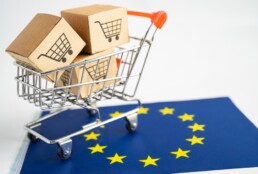
New European packaging regulation redefines rules for Spanish companies
New European packaging regulation redefines rules for Spanish companies
The adoption of the European Packaging and Packaging Waste Regulation (PPWR) represents a key change in packaging management in the European Union. As it is directly applicable in all countries, it eliminates regulatory differences and raises the requirements for companies. In Spain, where the Extended Producer Responsibility (EPR), The impact will be particularly relevant.
Companies will have to go beyond financing waste: they will have to redesign their packaging, opting for recyclable materials and more sustainable models. The goal is clear: to reduce waste and move towards a circular economy.
One of the key milestones is that all packaging should be recyclable by 2030.. In addition, minimum recycled content levels are set, especially for plastics, and certain single-use products are limited. Re-use and refill systems are also encouraged.
EPR is gaining prominence, with costs depending on the recyclability of the packaging: the more difficult it is to recycle, the higher the cost. This will incentivise eco-design at source.
In the short term, companies will face higher costs due to regulatory adaptation, changes in suppliers and new administrative obligations. Sectors such as food, retail and e-commerce will be the most affected.
However, opportunities also arise. Eco-design can reduce costs and improve competitiveness, while regulatory harmonisation makes it easier to operate across Europe.
In short, the PPWR is not just an environmental regulation, but a change of model towards a circular economy. Adapting will be mandatory, but doing so strategically can become a competitive advantage.
Contact